USDA hardiness zone 10b · 751 ZIP codes
Zone 10b planting calendar
Frost is rare in zone 10b: in 719 of its 751 ZIP codes most winters pass without a freeze, so there are no frost dates to count from. Plant by the seasons instead. The same calendar holds in zones 11a and 11b.
The zone at a glance
- Coldest winter nights
- 35 to 40 °F
- ZIP codes in the zone
- 751
- Frost
- rarein 719 of 751 ZIP codes
Planting by season in zone 10b
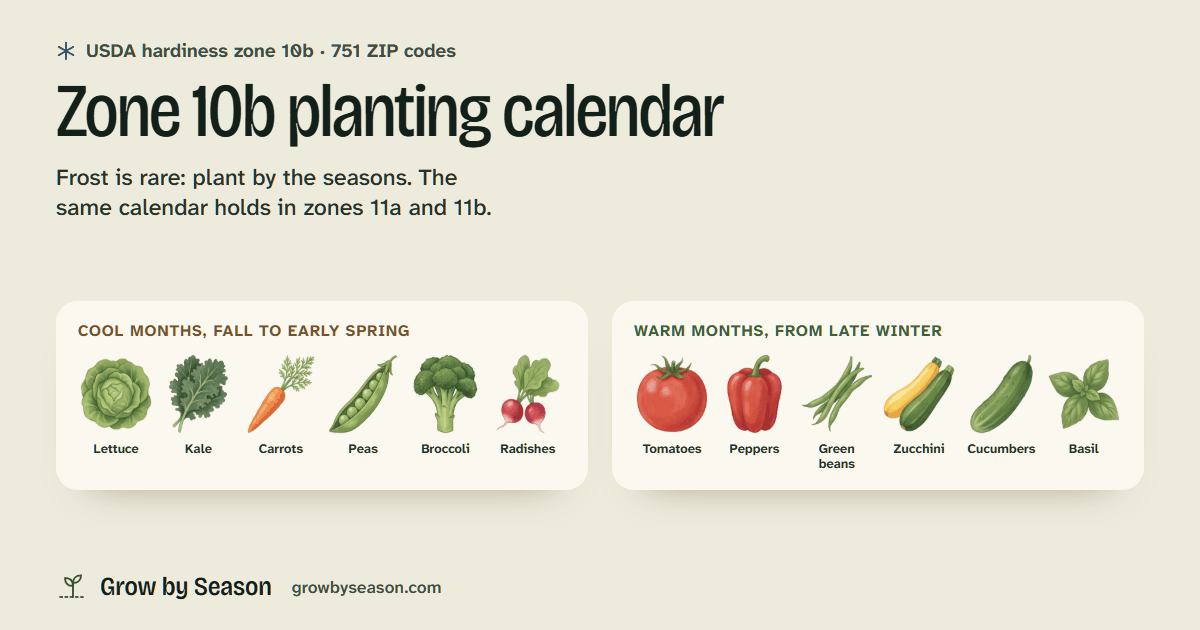
Cool months, fall to early spring
Leafy greens, roots, peas and the cabbage family grow best when the heat breaks. Sow from fall and keep sowing through winter.
Warm months, from late winter
Tomatoes, peppers, squash, beans and summer flowers go in from late winter, and again in late summer for a fall crop.
Perennials
Plant them in the cooler months so the roots settle before summer heat.
Rhubarb is the exception: it needs a cold winter to rest and seldom thrives where frost is rare. Spring bulbs such as tulips, daffodils and crocus need a winter chill too: see each one for what works where frost is rare.
Questions about zone 10b
What can I plant in zone 10b this fall?
Frost is rare here, so cool-season crops go in from fall to early spring: peas, lettuce, spinach, arugula, kale, Swiss chard, collard greens, mustard greens and 21 more.
How many frost-free days does zone 10b have?
Most years have no frost at all: in 719 of its 751 ZIP codes the median frost-free season is the whole year.
Which perennials survive the winter in zone 10b?
The Missouri Botanical Garden rates 2 of the 10 perennial crops here for zone 10 (30 to 40 °F): asparagus and rosemary. Rated only up to a colder zone: rhubarb, chives, oregano, sage, lavender and strawberries up to zone 8; thyme and mint up to zone 9.